Operating Lease Advantages in Canada: Lower Payments, Flexibility and When a Capital Lease Wins
Key advantages of an operating lease for Canadian businesses and when a capital lease is the better choice.
An operating lease lets a business use equipment for a fixed monthly payment without taking ownership. The lessor buys the equipment, you pay to use it for the length of the contract, and at the end you return it, renew or buy it at fair market value. It is the most common lease structure for equipment that changes quickly or that a business needs for a defined period rather than for the full life of the asset. For a broader look at leasing versus buying outright, see our guide to lease financing advantages and disadvantages.
Key takeaways
- Operating lease payments are generally deductible as a business expense in full in the year paid, which is simpler than the multi-year CCA schedule you follow when you buy equipment.
- Monthly payments are typically lower than on a capital lease for the same equipment because you are paying for the portion of its value you use, not full ownership.
- Under ASPE, the accounting standard most private Canadian companies follow, operating leases stay off the balance sheet, which can preserve borrowing ratios with your bank.
- A capital lease costs more per month but gives you an owned asset at the end, which suits long-lived equipment you plan to keep for years.
| Item | Detail |
|---|---|
| What it is | Fixed payments to use equipment without buying it; return, renew or buy at market value at term end |
| Tax treatment | Payments generally deductible as a business expense in the year paid |
| CCA comparison | Purchased equipment in Class 8 is depreciated at 20% per year on a declining balance |
| Common terms | 24 to 72 months |
| Balance sheet (ASPE) | Generally off-balance-sheet for private Canadian enterprises |
| Funding through CBL | Up to $1,000,000 |
Why businesses choose operating leases
Lower monthly payments
Because you are paying for the use of equipment rather than its full cost, monthly payments on an operating lease are typically lower than on a capital lease for the same asset. The lessor retains the residual value risk, and the portion of the equipment’s value you do not use up is the lessor’s concern, not yours. This leaves more cash in the business for payroll, materials and growth.
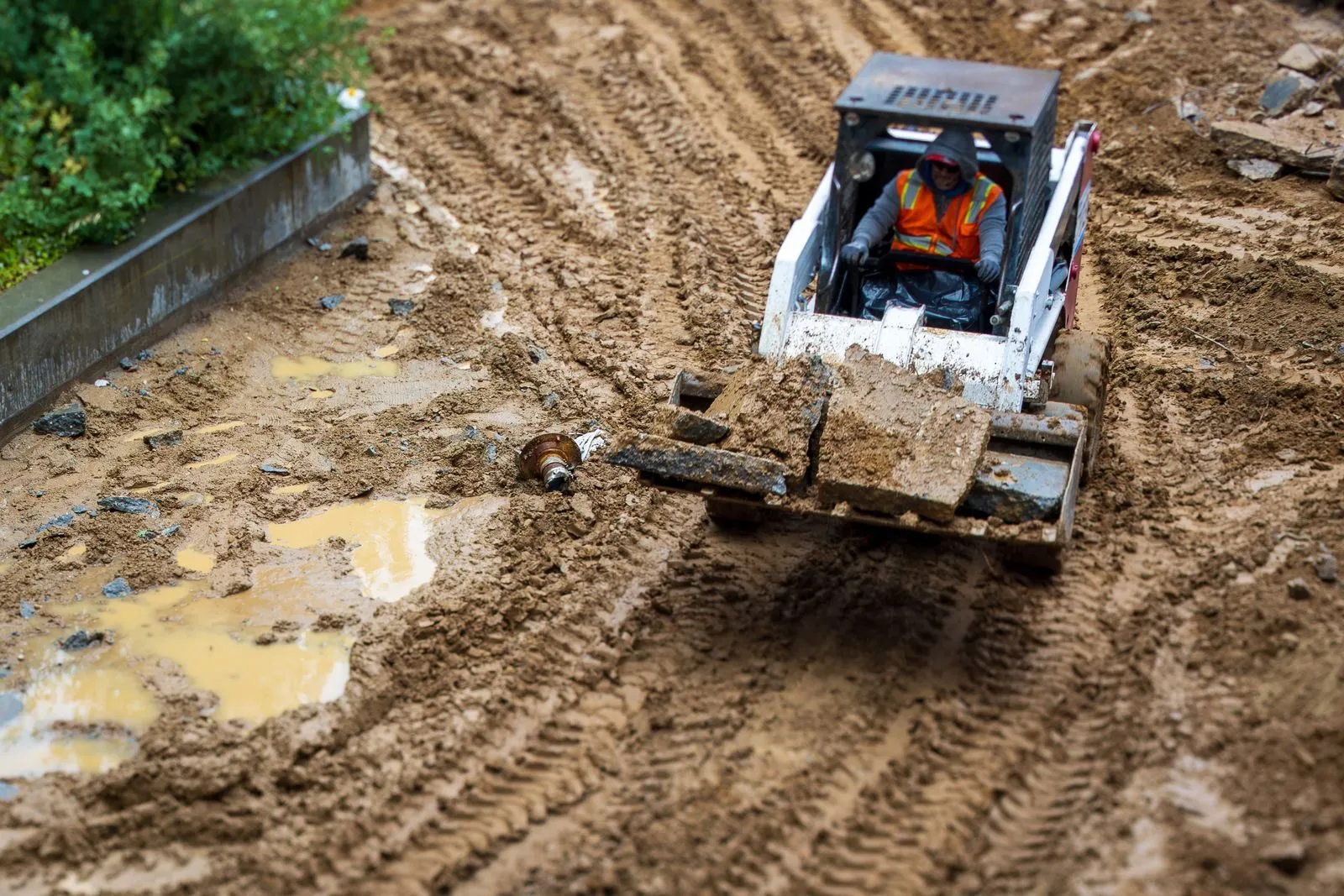
A construction company leasing a skid steer for a project, for example, pays less per month on an operating lease than it would on a capital lease for the same machine, because the capital lease covers the full purchase price while the operating lease covers only the period of use.
Full deductibility of payments as a business expense
Operating lease payments on business equipment are generally deductible as a business expense in the year you make them. If you buy the same equipment instead, you claim Capital Cost Allowance (CCA) on a declining balance schedule. For general machinery and equipment in CCA Class 8, the rate is 20% per year. That means it takes several years to fully depreciate the purchase price through CCA, whereas a lease payment flows through your expenses in the same year you pay it.
The federal Accelerated Investment Incentive does enhance first-year CCA for purchased equipment, but the enhancement is phasing out for property that becomes available for use before 2028. Your accountant can compare the net tax effect of leasing versus buying for your specific situation.
Protection against obsolescence
Some equipment becomes outdated well before it wears out. Diagnostic scanners, medical imaging devices, IT infrastructure, CNC controllers and software-dependent machinery all fall into this category. An operating lease lets you hand the equipment back at the end of the term and take on current technology instead. The risk that a machine loses value because something newer appears sits with the lessor, not with your business.
For industries where technology cycles are short, this advantage can outweigh the higher total cost of leasing over buying.
Balance sheet flexibility
Under Accounting Standards for Private Enterprises (ASPE), which most private Canadian companies follow, an operating lease generally stays off the balance sheet. The payments appear as an operating expense on the income statement, but no asset or liability is recorded on the balance sheet itself. This can help preserve key financial ratios that lenders and bonding companies monitor, such as the debt-to-equity ratio.
Heads-up: Companies reporting under IFRS 16 must record almost all leases longer than 12 months on the balance sheet as a right-of-use asset and a lease liability. The off-balance-sheet advantage of an operating lease applies mainly to ASPE filers. If your business reports under IFRS, ask your accountant how a given lease will appear before factoring the balance sheet effect into your decision.
Easier to upgrade and scale
With an operating lease, you are not tied to one piece of equipment beyond the term. A restaurant that leases a convection oven can move to a larger model when volume grows, without having to sell or trade in the old one. A construction company can lease a skid steer for a project and return it rather than storing a machine it does not need full time.
This makes operating leases particularly useful for:
- Businesses scaling up that are not yet sure of their long-term equipment needs
- Seasonal operations that need specific machines for part of the year
- Companies outfitting new locations with equipment they may not keep permanently
When a capital lease wins
An operating lease is not always the better choice. A capital lease (also called a finance lease or dollar-out lease) is built so that you own the equipment at the end of the term for a nominal buyout. It suits a different set of situations.
Long-lived equipment you plan to keep
If the equipment will stay productive in your business for most or all of its useful life, a capital lease means you end up owning it. Trucks, trailers, excavators, welding rigs and production machinery often run for a decade or more. Paying the higher monthly amount on a capital lease is effectively a purchase plan: every payment moves you closer to full ownership.
Lower total cost over the equipment’s life
Add up all the payments on a capital lease and compare them to the total cost of an operating lease for the same equipment, including any renewal or re-lease costs if you keep using it. The capital lease almost always costs less over the full life of the asset, because you are not paying the lessor to absorb the residual-value risk.
Building equity
Capital lease payments build equity in the equipment. Once the lease ends and you own the asset, you can sell it, trade it in, or refinance it to pull cash out. An operating lease builds no equity. Every payment is rent, and at the end of the term you have nothing to show for it unless you exercise a purchase option at market value.
CCA deductions and the Accelerated Investment Incentive
When a lease is treated as a purchase for tax purposes, as a capital lease generally is, the lessee claims CCA on the equipment. For property placed in service before 2028, the Accelerated Investment Incentive can enhance the first-year deduction. For some businesses, this front-loaded CCA produces a better tax result than deducting lease payments evenly over the term. Your accountant can model both scenarios.
Operating lease vs capital lease: side by side
| Factor | Operating lease | Capital lease |
|---|---|---|
| Monthly payment | Lower; you pay for use, not full value | Higher; covers the full cost plus financing |
| Ownership at end | Lessor owns; you return, renew or buy at market value | Yours for a nominal buyout |
| Tax deduction | Lease payments as a business expense | CCA on the asset, plus interest deduction |
| Balance sheet (ASPE) | Off-balance-sheet | On-balance-sheet as asset and liability |
| Total cost | Higher over the asset’s life (lessor carries residual risk) | Lower over the asset’s life |
| Obsolescence risk | Lessor carries it | You carry it |
| Equity | None built | Built with each payment |
For a deeper look at how each structure works and how duration and ownership differ, see our guide to operating and finance leases.
Pro tip: If you are comparing an operating lease and a capital lease on the same piece of equipment, ask for both quotes and run them past your accountant. The monthly payment difference is straightforward to compare, but the tax treatment, balance sheet impact and end-of-term position can shift the real cost significantly. A business that is close to a borrowing limit or needs to report clean ratios for bonding may find the operating lease worth the higher total cost, while a business with room on its balance sheet and a long-term use for the equipment will usually pay less with a capital lease.
How CBL Financial can help
CBL Financial arranges both operating leases and capital leases for businesses across Canada, with funding up to $1,000,000 and terms from 24 to 72 months. If you want to see how both structures compare for the same piece of equipment, apply online or try the equipment financing calculator to start modelling the numbers.
Frequently asked questions
What is the main advantage of an operating lease over buying?
The main advantage is preserving cash. An operating lease converts a large equipment purchase into a predictable monthly payment, and that payment is generally deductible as a business expense in the year you make it. You also avoid the risk of holding a depreciating asset if the equipment becomes outdated before it wears out.
Are operating lease payments tax deductible in Canada?
Lease payments on equipment used for business purposes are generally deductible as a business expense in the year paid. This is different from purchasing, where you claim Capital Cost Allowance over several years on a declining balance. Your accountant can confirm the treatment for your specific lease.
Does an operating lease show up on my balance sheet?
Under ASPE, the standard most private Canadian companies follow, an operating lease generally stays off the balance sheet. Under IFRS 16, which applies to publicly accountable enterprises, almost all leases longer than 12 months must be recorded on the balance sheet as a right-of-use asset and a lease liability. Ask your accountant which standard your business reports under.
When should I choose a capital lease instead?
A capital lease makes more sense when the equipment will stay productive for most of its useful life, you want to own it at the end, and you prefer to build equity with each payment. It also tends to cost less over the full life of the equipment because you are not paying the lessor to carry the residual-value risk.
Can I switch from an operating lease to a capital lease partway through?
Generally, no. A lease is a binding contract for its full term, and the structure is set when you sign. If your needs change, you can negotiate the structure on your next lease. If you are unsure which to choose, ask for quotes on both structures before signing so you can compare the total cost, tax treatment and end-of-term outcome.
How fast can I get funded for an equipment lease?
Timelines depend on the complexity of the file and how complete your application is. Through CBL Financial, approvals can come the same day for straightforward files, with funding in as little as 48 hours.
General information, not financial advice.