Auto Repair Equipment Financing in Canada: Options, Tax Treatment and What Lenders Look For
How Canadian auto repair shops finance lifts, alignment machines and diagnostic tools through leases, loans and the CSBFP.
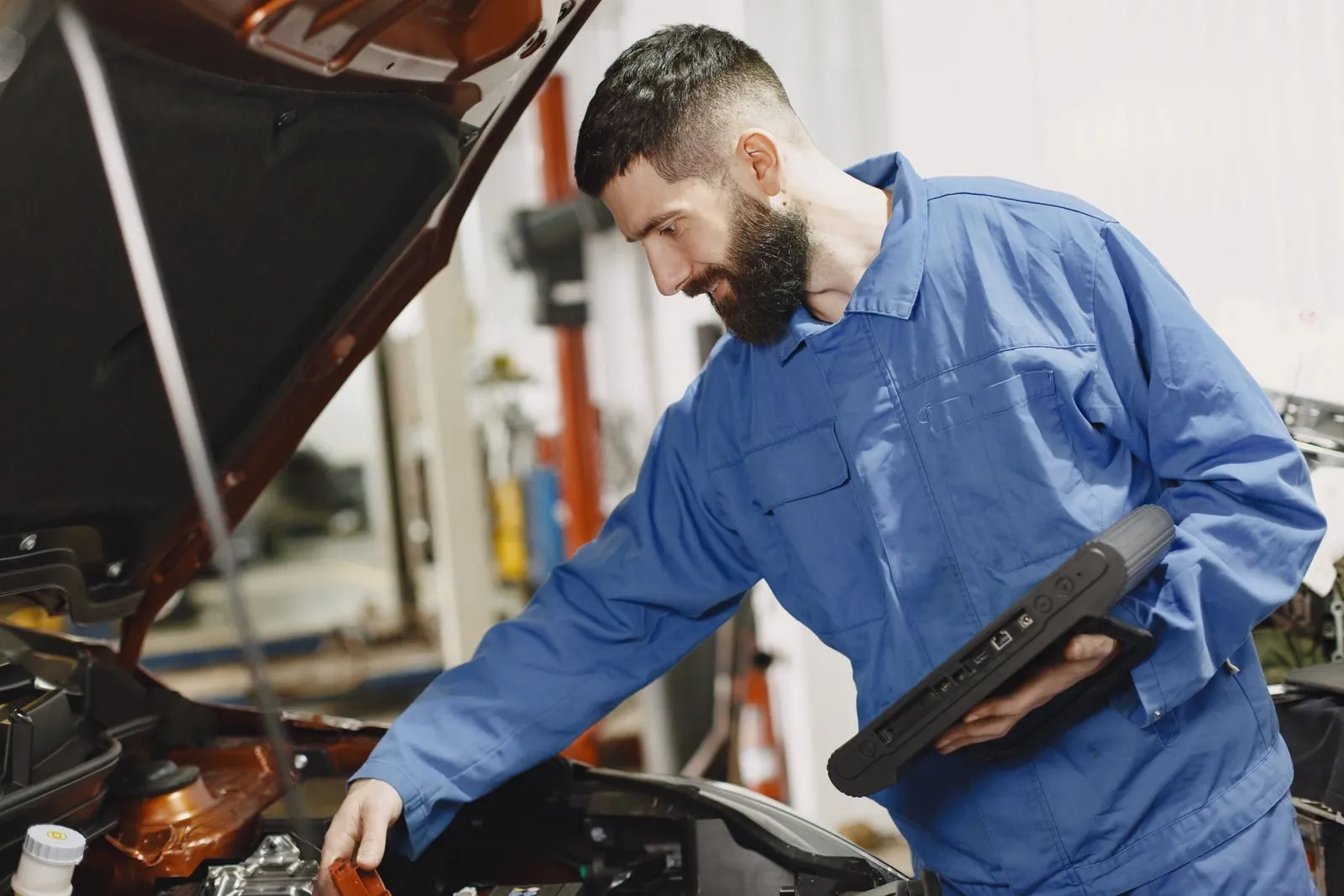
Auto repair equipment financing is a lease or loan that lets a shop acquire lifts, wheel alignment machines, diagnostic scanners and other service bay equipment without paying the full cost up front. Canada’s automotive repair and maintenance sector brought in over $31 billion in operating revenue in 2024 (Statistics Canada, NAICS 8111), yet average operating profit margins sat at just 9.3%. Equipment is expensive and margins are tight, which is why most shop owners finance rather than pay cash.
Key takeaways
- The Canada Small Business Financing Program covers auto repair equipment purchases up to $500,000, with a government loss-sharing guarantee that can make approval easier for newer shops and first-time buyers.
- Most shop equipment falls into CCA Class 8 at 20% per year when purchased outright. Hand tools costing less than $500 each qualify for Class 12 and can be fully written off in the year of purchase.
- Lease payments on shop equipment used in the business are generally deductible as a business expense in the year they are made, which is simpler than spreading deductions over years through CCA.
- The federal Accelerated Investment Incentive enhances first-year CCA for equipment acquired before 2028, though it is being phased out at a reduced rate for equipment placed in service from 2024 through 2027.
| Item | Detail |
|---|---|
| Equipment covered | Two-post and four-post lifts, wheel alignment systems, diagnostic scanners, tire changers, wheel balancers, brake lathes, air compressors, ADAS calibration rigs |
| Common structures | Equipment lease, term loan, CSBFP loan |
| CSBFP equipment limit | Up to $500,000 for equipment and leasehold improvements |
| CCA class (purchased) | Class 8 at 20% declining balance; hand tools under $500 each qualify for Class 12 (full write-off) |
| Funding through CBL | Up to $1,000,000, terms from 24 to 72 months |
Equipment categories auto repair shops typically finance
A general repair shop needs equipment across several categories, and the total cost of outfitting even a modest three-bay operation means most new shops and expansions involve some form of financing.
Lifts and hoists. Two-post and four-post lifts are the core of any service bay. A shop with three or four bays needs a lift in each one, and specialty work adds in-ground lifts, mid-rise lifts or motorcycle and ATV lifts. Lifts are heavy, permanently installed and typically the most expensive per-unit item in a general repair shop.
Wheel alignment systems. Alignment machines range from basic CCD sensor systems to 3D imaging systems with ADAS calibration capability. As advanced driver-assistance systems become standard on newer vehicles, shops that want to handle ADAS calibration after windshield replacement or suspension work need higher-end alignment equipment.
Diagnostic and scanning equipment. OBD-II scan tools, manufacturer-specific diagnostic platforms, oscilloscopes, emissions analyzers and ADAS calibration rigs. The range of work a shop can take in increasingly depends on its diagnostic capability, particularly as vehicle electronics grow more complex.
Tire service equipment. Tire changers, wheel balancers, TPMS service tools and nitrogen inflation systems. Tire work is high-volume, steady-margin business for many independent shops, and the equipment wears with regular use.
Air compressors and shop infrastructure. Rotary screw or reciprocating compressors, piping, air dryers, fluid management systems, exhaust extraction and shop lighting. These items support every bay and service line in the shop.
Specialty equipment. Brake lathes, AC recovery and recharge machines, welding equipment, paint booths and frame straightening systems. Shops that expand into collision repair or add a specialty service line often finance these items separately.
Financing options for auto repair equipment
Canada Small Business Financing Program (CSBFP)
The CSBFP is a federal program that encourages lenders to finance small businesses by sharing the risk of default with the government. Auto repair shops qualify as long as their gross annual revenue is $10,000,000 or less.
The program covers equipment purchases and leasehold improvements up to $500,000 per borrower, with total CSBFP lending to a single borrower capped at $1,150,000. Interest is capped at a spread of 3% above the lender’s prime rate for floating-rate term loans or 3% above the single-family residential mortgage rate for fixed-rate loans. A 2% registration fee applies to the loan amount.
Because the government backs a portion of the loss, lenders are often more willing to approve newer shops or first-time shop owners who might not qualify for conventional commercial credit. CSBFP loans are available through most chartered banks and credit unions.
Equipment leasing and loans through a broker
When a bank or CSBFP loan does not fit the situation (newer shop, used equipment, private-sale purchase, or credit outside the bank’s criteria), an equipment broker can place the file with lenders that specialize in automotive and industrial equipment. A broker prepares one application and sends it to multiple lenders, so the shop owner can compare offers on rate, term and structure.
Equipment leases and term loans both work for shop equipment. A lease keeps cash on hand and offers simpler tax treatment (payments deductible as operating expenses). A loan builds ownership from day one and may cost less over the equipment’s full life. For a deeper comparison, see our guide to lease financing advantages and disadvantages.
Pro tip: If you are opening a new shop or expanding into more bays, list every piece of equipment you need before you apply. Bundling lifts, alignment, diagnostic and tire service equipment into a single financing package often gets better terms than financing each item separately, because the total deal size is larger and the lender can spread its fixed costs across one file.
Tax treatment for auto repair equipment
How shop equipment is taxed depends on whether the business buys or leases it.
Purchased equipment: Capital Cost Allowance
Shop equipment purchased outright or through a loan is claimed through Capital Cost Allowance (CCA). Most auto repair equipment, including lifts, alignment machines, diagnostic scanners, brake lathes and air compressors, falls into Class 8 with a CCA rate of 20% per year on a declining balance.
Hand tools that cost less than $500 each (wrenches, sockets, pry bars, specialty hand tools) qualify for Class 12 and can be written off in full in the year of purchase.
The federal Accelerated Investment Incentive enhances first-year CCA for newly acquired equipment. The incentive is being phased out and applies at a reduced rate to equipment that becomes available for use from 2024 through 2027. Equipment available for use in 2028 or later will not qualify. Your accountant can confirm whether the enhanced rate applies to equipment you purchase now.
Leased equipment: operating expense deduction
Lease payments on equipment used in the shop are generally deductible as a business expense in the year they are made. This is simpler than the multi-year CCA schedule that applies to purchased equipment, and it gives the shop a predictable tax deduction each year of the lease.
The CRA requires that the payments reasonably relate to earning business income. If the lease is structured so that ownership effectively transfers (a buyout with a nominal purchase option, for example), the CRA may treat it as a purchase for tax purposes. Your accountant can advise on how a specific lease structure would be classified.
Heads-up: Diagnostic platforms and alignment machines often come with annual software subscription fees on top of the equipment payment. Before signing, make sure you understand whether the subscription is included in the lease or billed separately, because those fees can add several thousand dollars over a five-year term.
How CBL Financial can help
CBL Financial arranges equipment leases and term loans for auto repair shops across Canada, with funding up to $1,000,000 and terms from 24 to 72 months. We work with lenders that understand automotive equipment and can fund deals involving used lifts, private sales and full shop fit-outs. To see what a lease or loan would look like for your equipment list, apply online or try the equipment financing calculator.
Frequently asked questions
Can I finance used auto repair equipment?
Yes. Used equipment with a verifiable serial number and enough remaining useful life can be financed through a lease or loan. Private sales and auction purchases also qualify with most lenders. The lender evaluates the equipment’s condition and remaining value as part of the approval.
Does the CSBFP cover auto repair shop equipment?
The CSBFP covers equipment purchases and leasehold improvements up to $500,000 for Canadian businesses with gross annual revenue of $10,000,000 or less. Auto repair shops are eligible. Because the government shares the default risk with the lender, newer shops and first-time buyers can qualify more readily than through conventional commercial credit.
What CCA class does auto repair equipment fall into?
Most auto repair equipment (lifts, alignment machines, diagnostic scanners, brake lathes, compressors) falls into CCA Class 8 with a rate of 20% per year on a declining balance. Hand tools costing less than $500 each qualify for Class 12 and are fully deductible in the year of purchase. For a fuller breakdown of how equipment tax deductions work, see our guide to equipment financing tax benefits.
Is it better to lease or buy shop equipment?
Leasing preserves cash and gives a simpler tax deduction each year. Buying costs less over the equipment’s full life and puts the asset on the shop’s balance sheet. For equipment with a long productive life (lifts, compressors), buying often makes more sense. For technology that changes quickly (diagnostic platforms, alignment systems with ADAS), leasing lets you upgrade at the end of the term. Many shops use both approaches for different equipment categories.
How fast can an auto repair shop get approved for equipment financing?
Timelines depend on the deal, the lender and how complete the application is. CSBFP loans through a bank may take several weeks. Through CBL Financial, approvals can come the same day for straightforward files, with funding in as little as 48 hours.
Can I finance a full shop buildout, not just standalone equipment?
Yes. Leasehold improvements (electrical, plumbing, compressed air piping, exhaust extraction, flooring) can be bundled with equipment into a single financing facility. The CSBFP specifically covers both equipment and leasehold improvements within its $500,000 limit. Some lenders also finance working capital to cover the gap between opening the doors and collecting revenue.
General information, not financial advice.