Tree Service Equipment Financing in Canada: Chippers, Stump Grinders, Bucket Trucks and What Lenders Look For
How Canadian arborists and tree removal companies finance chippers, stump grinders and bucket trucks through leases, loans and the CSBFP.
Tree service equipment financing is a lease or loan that lets an arborist or tree removal company acquire chippers, stump grinders, bucket trucks and other heavy equipment without paying the full cost from working capital. A single bucket truck or a commercial-grade chipper can represent a six-figure purchase, and most tree care businesses run seasonal revenue. Financing spreads the cost across monthly payments so the business can take on contracts and generate income from the equipment while it pays for itself.
Key takeaways
- Most standalone tree service equipment such as chippers and stump grinders falls into CCA Class 8 at 20% declining balance, while bucket trucks and chip trucks are motor vehicles in Class 10 at 30% or Class 16 at 40% for trucks rated above 11,788 kilograms
- The Canada Small Business Financing Program backs equipment loans up to $500,000 for businesses with annual revenue under $10,000,000, and tree service equipment qualifies
- Lenders evaluate tree service companies on contract history, revenue seasonality and the resale value of the equipment, so a clear record of recurring municipal or utility contracts strengthens your file
- The federal Accelerated Investment Incentive enhances first-year CCA deductions for equipment placed in service before 2028, though it is phasing down through 2027
| Item | Detail |
|---|---|
| Equipment covered | Brush chippers, stump grinders, bucket trucks, chip trucks, log loaders, grapple trucks, skid steers, trailers |
| Funding available | Up to $1,000,000 through CBL Financial |
| Terms | 24 to 72 months |
| CSBFP equipment loan cap | $500,000 per borrower |
| Bank of Canada policy rate | 2.50% as of October 2026 |
| Approval speed | Same-day approvals available |
Equipment tree service companies typically finance
A working tree crew needs several pieces of equipment that each serve a different function. Most tree service businesses finance at least one of the following, and many finance several at once.
Brush chippers. A commercial drum or disc chipper processes branches and brush into wood chips for disposal or mulch. Chippers range from small towable units behind a pickup to large whole-tree chippers mounted on a tandem-axle trailer. A production chipper capable of handling the volume a full crew generates is a significant purchase.
Stump grinders. After a tree is removed, the stump needs to come out. Stump grinders range from walk-behind units for residential work to self-propelled machines that handle stumps a metre or more in diameter. The cutting teeth are a recurring consumable cost, but the machine itself is a capital asset.
Bucket trucks. An aerial lift truck lets a climber or technician work at height safely and efficiently. Bucket trucks used in tree work typically have a working height of 18 to 23 metres and are mounted on a Class 5 or heavier chassis. These are often the single most expensive asset in a tree service fleet.
Chip trucks. A dedicated chip body on a medium-duty truck carries the output from the chipper to a dump site or mulch yard. Some crews run a chip box on the same truck that pulls the chipper, while others run a separate chip truck to keep the operation moving.
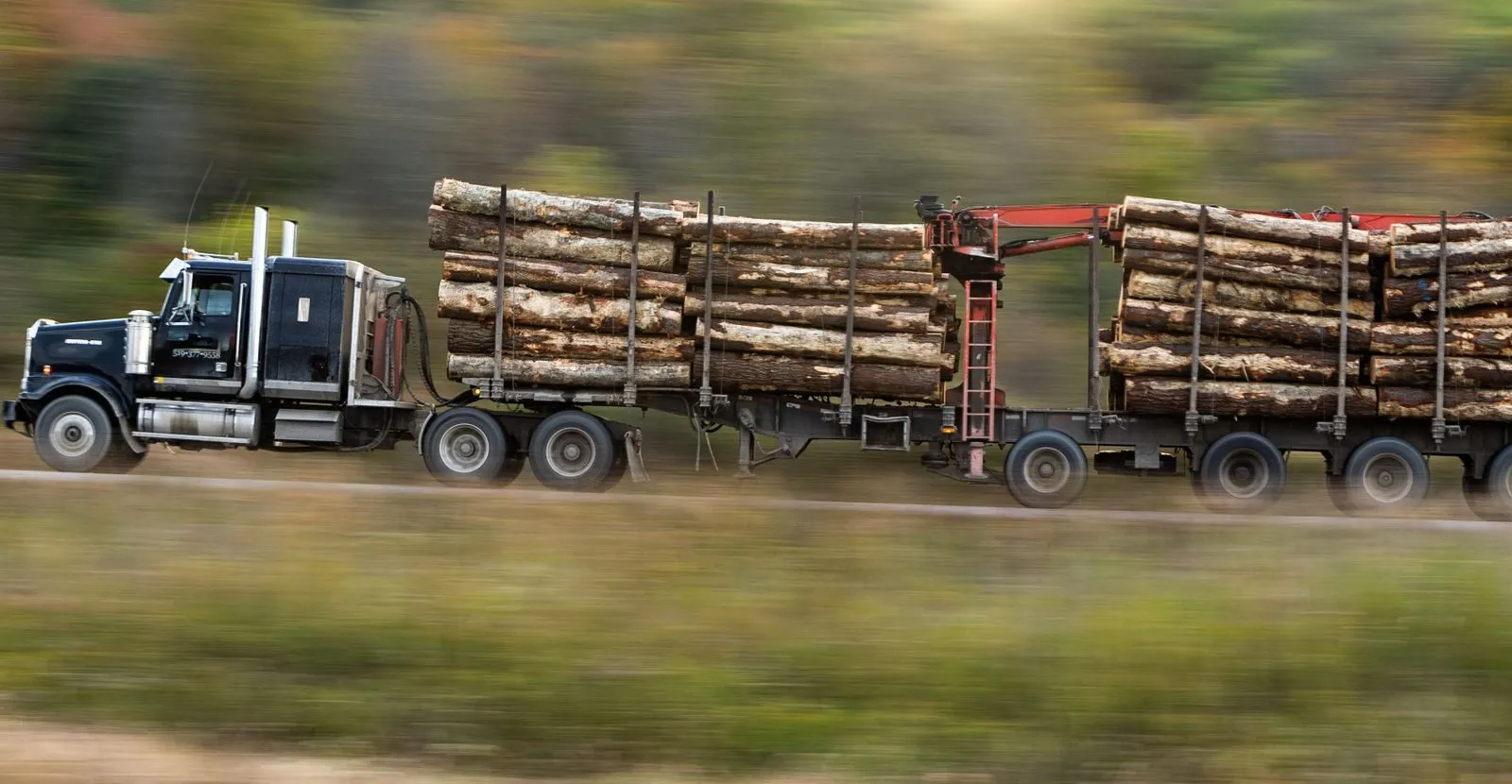
Log loaders and grapple trucks. For removal jobs involving large wood, a knuckleboom loader or grapple truck handles logs that are too heavy for the crew to lift manually. These trucks also haul the wood to a mill, firewood processor or disposal site.
Skid steers and compact equipment. Land clearing, lot preparation and storm cleanup often require a skid steer with a mulching head, brush cutter or grapple attachment. These machines fall into the compact equipment category but can still represent a purchase in the tens of thousands of dollars.
Lease vs. loan for tree service equipment
The choice between an equipment lease and an equipment financing loan depends on how long you plan to run the equipment and whether you want to own it outright.
| Equipment lease | Equipment loan | |
|---|---|---|
| Ownership | The lessor owns the equipment during the term | You own the equipment from day one |
| End of term | Return, upgrade or buy out at a pre-set residual | Equipment is yours, fully paid |
| CCA treatment | You deduct lease payments as a business expense | You claim CCA on the asset (Class 8, 10 or 16) |
| Cash outlay | Lower monthly payments; may require first-and-last | May require a down payment; higher monthly payments but you build equity |
| Flexibility | Easier to upgrade when a newer model is worth the switch | Better for equipment you plan to run for its full working life |
A lease suits equipment you expect to upgrade within a few years, such as a chipper where the newest feed systems and safety features matter. A loan makes more sense for bucket trucks and grapple trucks you plan to run for a decade or more.
Pro tip: Run both options through the equipment financing calculator before deciding. On the loan side, factor in the CCA deductions you can claim. On the lease side, remember that the full payment is deductible as a business expense in the year it is made, which can simplify your tax situation. Your accountant can model which structure saves more after tax.
CCA classes for tree service equipment
When you purchase equipment outright (through a loan or cash), you depreciate it for tax purposes under the Capital Cost Allowance system. Tree service equipment splits across several CCA classes depending on the asset type.
| Equipment | CCA class | Rate | Why this class |
|---|---|---|---|
| Chippers (towable or standalone) | Class 8 | 20% | General machinery and equipment not included in another class |
| Stump grinders | Class 8 | 20% | General machinery and equipment not included in another class |
| Bucket trucks (under 11,788 kg) | Class 10 | 30% | Motor vehicles |
| Chip trucks (under 11,788 kg) | Class 10 | 30% | Motor vehicles |
| Grapple trucks, log trucks (over 11,788 kg) | Class 16 | 40% | Freight trucks acquired after December 6, 1991, rated above 11,788 kg |
| Trailers | Class 10 | 30% | Motor vehicles category |
| Chainsaws and hand tools under $500 | Class 12 | 100% | Tools costing less than $500 each |
The Accelerated Investment Incentive suspends the standard half-year rule for eligible property acquired before 2028. For equipment placed in service during 2024 through 2027, the incentive provides an enhanced first-year deduction at a reduced phase-down rate. The exact benefit depends on the class and the year the equipment enters service, so have your accountant calculate it for your specific purchase. For a broader walkthrough of CCA classes and deduction mechanics, see our equipment financing tax benefits guide.
Heads-up: The CCA class for a bucket truck depends on its gross vehicle weight rating. Most commercial bucket trucks used in tree work are mounted on Class 5 to Class 7 chassis and fall under the 11,788-kilogram threshold, putting them in Class 10 at 30%. Larger units on a tandem-axle chassis that exceed that weight qualify for Class 16 at 40%. Check the truck’s registration or the manufacturer’s spec sheet for the exact GVWR.
Canada Small Business Financing Program (CSBFP)
The CSBFP is a federal program that shares the risk on small business loans with approved lenders. If a borrower defaults, the government covers a portion of the loss, which makes lenders more willing to approve files that might not qualify under conventional terms alone.
Key details for tree service equipment:
- Equipment loans up to $500,000 per borrower for equipment and leasehold improvements
- Total borrowing across all CSBFP loan categories up to $1,150,000
- Floating rate capped at the lender’s prime rate plus 3%; fixed rate at the single-family residential mortgage rate plus 3%
- A one-time registration fee of 2% of the loan amount
- The business must have estimated annual gross revenue under $10,000,000
The CSBFP is worth considering if you are a newer tree service company or if your credit profile makes conventional bank terms harder to secure. The government loss-sharing arrangement can be the difference between a yes and a no on a file that a bank would otherwise pass on.
What lenders look at for tree service companies
Tree service businesses have a few characteristics that shape how lenders evaluate a financing application.
Seasonal revenue. Most tree work in Canada runs from spring through late fall, with a slower winter period in regions where the ground freezes. Lenders want to see that you can make payments year-round, so demonstrating how you manage cash flow through the off-season matters. Some lenders offer seasonal or skip-payment structures that reduce winter payments and increase summer payments to match your earning cycle.
Contract history. Recurring contracts with municipalities, utilities, developers or property management companies show a lender that revenue is predictable. A two-year contract to maintain utility corridors is a stronger signal than a list of one-off residential removals, though residential work is perfectly financeable if the volume supports the payment.
Equipment resale value. Lenders consider what the equipment would sell for if they had to recover it. Well-known brands with an active resale market (Vermeer, Bandit, Morbark for chippers; Altec, Terex for bucket trucks) are easier to finance than obscure or heavily customized units. Used equipment with a verifiable serial number and reasonable remaining life also qualifies.
Insurance and certifications. Tree work is high-risk from an insurance standpoint. Lenders may want to see proof of commercial general liability, vehicle insurance and workers’ compensation coverage. Holding an ISA Certified Arborist credential or similar industry certification does not decide the outcome, but it signals professionalism.
Financing new vs. used tree service equipment
Both new and used tree service equipment qualify for financing, including units sourced from dealers, auctions or private sales. Used equipment is common in the tree care industry because commercial chippers and bucket trucks hold their value well and have long service lives when maintained.
A few things change when financing used equipment:
- The lender will look at the age, hours and condition of the unit more closely than they would for a new purchase
- Interest rates on used equipment are sometimes marginally higher to reflect the shorter remaining useful life
- A verifiable serial number and clear title are required, and some lenders run lien searches before funding
CBL Financial works with lenders who routinely finance used equipment, including units from private sellers and auctions. That flexibility matters in tree service, where a well-maintained used chipper or bucket truck from a fleet turnover can have years of productive life remaining at a fraction of the new price.
How CBL Financial can help
CBL Financial arranges equipment financing and leasing for tree service companies across Canada, covering chippers, stump grinders, bucket trucks, chip trucks and log loaders. We place your file with lenders who understand seasonal revenue and equipment that works hard, with funding up to $1,000,000 and terms from 24 to 72 months. If you are ready to add or replace equipment, start an application or run the numbers through our equipment financing calculator.
Frequently asked questions
Can I finance a used chipper or bucket truck?
Yes. Both new and used tree service equipment qualify for financing, including units purchased from dealers, auctions or private sellers. The lender will evaluate the age, condition and remaining useful life of the equipment. A verifiable serial number and clear title are required, and the unit needs to have reasonable remaining service life relative to the loan term.
What CCA class does a brush chipper fall into?
A standalone or towable brush chipper generally falls into CCA Class 8 at 20% declining balance, which covers machinery and equipment not included in another class. If the chipper is permanently mounted on a truck chassis, the entire unit may be classified as a motor vehicle under Class 10 at 30%. Your accountant can confirm the correct classification based on how the equipment is configured and used.
Do I need a down payment to finance tree service equipment?
It depends on the lender and your credit profile. Some lenders offer structures with no money down, while others require a down payment to reduce their exposure. Stronger credit, established business history and equipment with good resale value all improve your chances of qualifying for a low or zero down payment structure.
How does seasonal revenue affect my application?
Lenders understand that tree service revenue peaks in the warmer months. The key is showing that you manage cash flow through the off-season, either through savings, winter services like storm cleanup and snow removal, or recurring contracts that run year-round. Some lenders offer seasonal payment structures that match your revenue cycle.
Is the CSBFP available for tree service equipment?
Yes. The Canada Small Business Financing Program backs equipment loans up to $500,000 for businesses with annual revenue under $10,000,000. Tree service equipment qualifies, and the program’s government loss-sharing arrangement can make it easier to get funded if your credit profile or business history would not meet conventional bank requirements.
Can I finance multiple pieces of equipment on one application?
Tree service companies often need a chipper, a truck and a stump grinder at the same time, especially when starting out or expanding a crew. CBL Financial can structure a single file that covers multiple pieces of equipment, which simplifies the process compared to submitting separate applications for each item.
General information, not financial advice.