Long-Term Equipment Loans in Canada: What a 7 to 10 Year Term Really Costs
Compare 5, 7 and 10 year equipment loan terms in Canada: monthly payments, total interest cost and when a longer amortization makes sense.
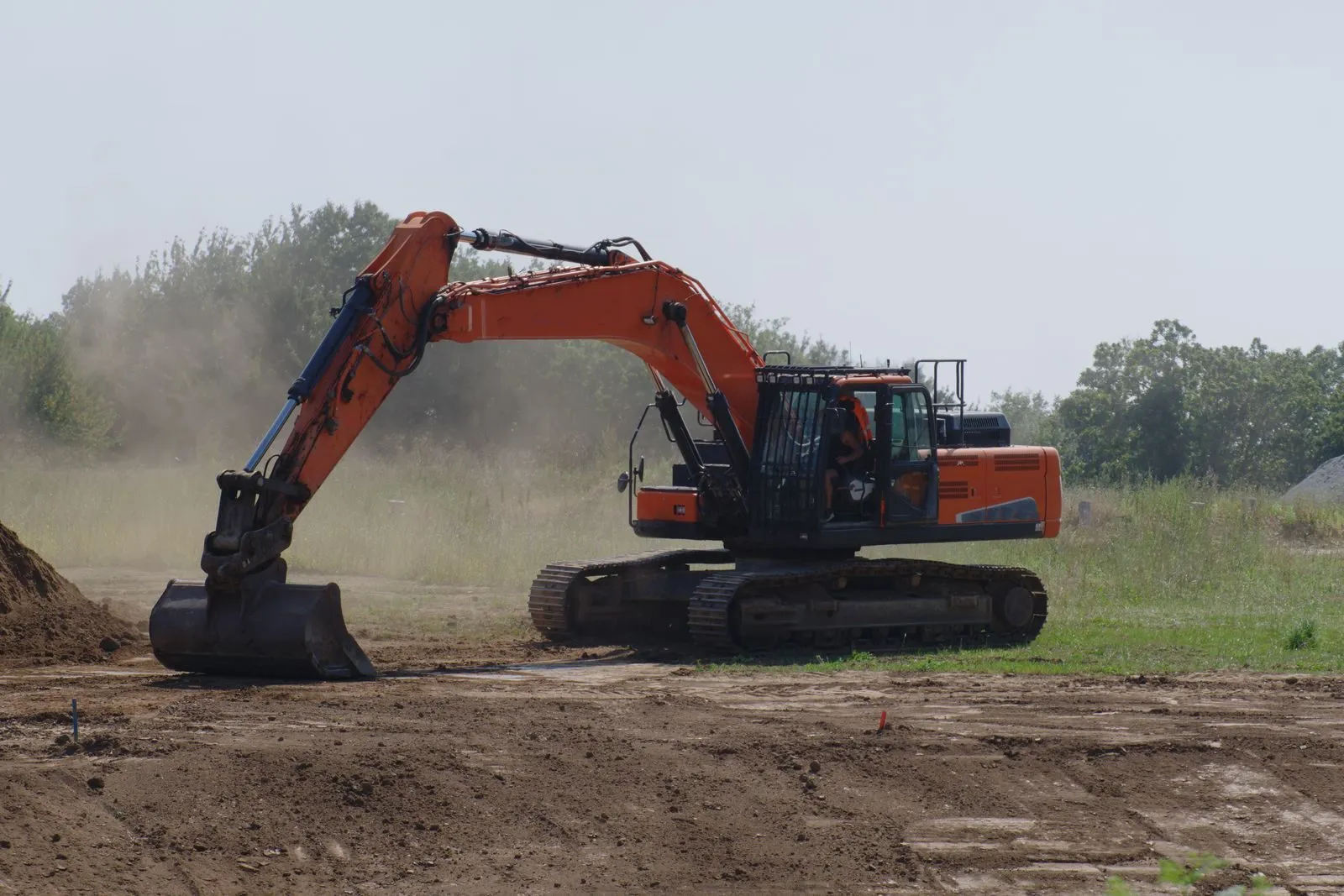
A long-term equipment loan is a loan with an amortization longer than the typical five or six year maximum most commercial lenders offer. Terms of 7, 8, 10 or even 15 years are available through certain lenders and government-backed programs in Canada, and they suit businesses financing expensive, long-lived assets like excavators, manufacturing lines or fleet vehicles that will stay productive for a decade or more.
Key takeaways
- A 10 year term on a $200,000 equipment loan at 8% (example rate, not a quote) drops the monthly payment by $1,628 compared to a 5 year term, but adds $47,869 in total interest.
- Matching the loan term to the equipment’s useful life is the standard financing principle: if the machine earns revenue for 10 years, a 10 year amortization keeps the payment below what the equipment generates each month.
- The Canada Small Business Financing Program (CSBFP) allows equipment loan terms up to 15 years, which is longer than most private lenders will go.
- A longer term only helps if the equipment holds up. Financing a machine past its productive life means you are still making payments on something that costs more to maintain than it earns.
| Item | Detail |
|---|---|
| Common long-term range | 7 to 10 years (some programs up to 15) |
| Where available | BDC, CSBFP-registered lenders, Farm Credit Canada, some independent lenders |
| CSBFP max for equipment | $500,000 (as of November 2026) |
| CSBFP rate cap (floating) | Prime plus 3% (as of November 2026) |
| Average SME term loan rate | 9% in 2023, 7.3% in 2024 (ISED) |
| Best suited for | Heavy construction, manufacturing, agricultural and transportation equipment with 10+ year useful lives |
How term length changes the total cost
The monthly payment on a longer term is lower because the principal is spread over more months. The trade-off is that you pay interest for longer, so the total cost of the loan goes up. Here is what that looks like on a $200,000 equipment loan at 8% (example rate, not a quote):
| Term | Monthly payment | Total paid | Total interest |
|---|---|---|---|
| 60 months (5 years) | $4,055 | $243,317 | $43,317 |
| 84 months (7 years) | $3,117 | $261,848 | $61,848 |
| 120 months (10 years) | $2,427 | $291,186 | $91,186 |
Going from 5 years to 10 years cuts the monthly payment from $4,055 to $2,427. That is $1,628 less per month flowing out of your operating account. But you pay $91,186 in interest instead of $43,317, a difference of $47,869 over the life of the loan.
Whether that extra interest is worth it depends on what your business does with the $1,628 each month. If the freed-up cash covers payroll on a crew that generates more than $47,869 in margin over those years, the longer term pays for itself. If the savings just sit idle, you are paying $47,869 for breathing room you did not need.
Pro tip: Use the equipment financing calculator to run your own numbers at different terms and amounts. The break-even is different for every business.
When a longer term makes sense
The rule most lenders follow is straightforward: match the loan term to the useful life of the equipment. If the machine, truck or line will produce revenue for 10 years, a 10 year term keeps the monthly cost aligned with what the asset earns.
Equipment that commonly justifies a 7 to 10 year term:
- Wheel loaders. Average useful life of about 10 years (as of March 2026).
- Bulldozers. Typical primary production life of 7 to 10 years (as of March 2026).
- Manufacturing lines and CNC machines. Heavy metalworking equipment routinely operates 15 to 20 years with proper maintenance.
- Agricultural combines and large tractors. Seasonal use means lower annual hours, often stretching the productive life well past 10 years.
- Commercial trucks and trailers. Class 8 trucks can run over a million kilometres if maintained, though powertrain rebuilds add to the total ownership cost.
Where a longer term does not fit well: technology that becomes obsolete (IT hardware, some diagnostic equipment), lighter equipment with a 3 to 5 year working life (small tools, light vehicles), or anything where maintenance costs climb sharply after a few years. For those assets, a standard equipment loan with a shorter term keeps you from paying on equipment you have already replaced.
Tax treatment over a longer term
How you claim the tax deduction on financed equipment depends on the CCA class the asset falls into. The declining-balance CCA rate determines how quickly you write down the asset for tax purposes, and it does not change with your loan term.
The classes that matter most for long-term loans:
- Class 8 (20% declining balance): Most general machinery, furniture, fixtures, and equipment not covered by another class. At 20% declining balance, it takes roughly 10 years to depreciate about 90% of the cost.
- Class 43 (30% declining balance): Manufacturing and processing equipment. Faster depreciation, with most of the value written off in about 7 years.
- Class 53 (50% declining balance): Manufacturing equipment acquired after 2015 and before 2026. The accelerated rate lets you write off the cost much faster, but this class is not available for equipment acquired in 2026 or later.
The Accelerated Investment Incentive (AII) is still active but phasing out. For most general equipment becoming available for use in 2026 or 2027, the AII doubles the normal first-year CCA deduction. The property must be available for use before 2028 to qualify. For a deeper look at how CCA interacts with equipment financing, see our guide to equipment financing tax benefits in Canada.
The practical point: a 10 year loan term does not give you a 10 year tax write-off. CCA is claimed on the asset’s declining balance each year regardless of the loan schedule. With Class 8 equipment, the CCA timeline roughly matches a 10 year loan. With Class 43 equipment at 30%, the tax write-off runs ahead of the payments on a longer term.
Heads-up: The tax rules here are general. Your accountant can confirm the class, the AII eligibility, and what the deductions look like for your specific purchase.
Government-backed programs with longer terms
The Canada Small Business Financing Program (CSBFP) offers equipment loan terms up to 15 years, with a maximum of $500,000 for equipment and leasehold improvements combined. The interest rate is capped at the lender’s prime plus 3% for floating-rate loans. The program is delivered through chartered banks and credit unions, and it was designed for small businesses that might not qualify for conventional commercial lending on their own.
According to the 2023 Survey on Financing and Growth of SMEs, Canadian SMEs paid an average interest rate of 9% on term loans in 2023. By 2024, the average across all SME debt financing had come down to 7.3%, according to ISED’s credit condition trends report. The rate on a specific equipment loan depends on the borrower’s credit, the asset, and the lender, but those averages give a sense of the range.
If the equipment is used in agriculture, Farm Credit Canada offers terms that can extend to 10 years for new equipment. For more on that, see our guide to agricultural equipment financing in Canada.
How CBL Financial can help
CBL Financial arranges equipment loans and leases with terms from 24 to 72 months, with funding up to $1,000,000. We present your file to the lenders best matched to your equipment type, credit profile and term preference, so you can compare offers on rate, structure and length before you decide. If you already own equipment and want to restructure payments, equipment refinancing is another option. Start with a quick application at cblf.ca/apply.
Frequently asked questions
Is a 10 year equipment loan available in Canada?
Yes. The Canada Small Business Financing Program (CSBFP) allows terms up to 15 years on equipment loans. BDC and Farm Credit Canada also offer extended terms. Private and independent lenders typically cap at 5 to 7 years, though some will go longer for high-value, long-lived assets. The term you receive depends on the lender, the equipment’s useful life and your credit profile.
Does a longer term mean I pay more interest overall?
Yes. On a $200,000 loan at 8% (example rate, not a quote), a 10 year term costs $91,186 in interest compared to $43,317 on a 5 year term. The monthly payment is lower, but you pay interest for twice as long. Whether the trade-off is worth it depends on how much the lower payment helps your cash flow.
Should I match the loan term to the equipment’s useful life?
That is the standard financing principle. If a wheel loader will produce revenue for 10 years, a 10 year term keeps the monthly payment below what the equipment generates. Financing past the useful life means you are making payments on equipment that may need expensive repairs or replacement.
What CCA class applies to most equipment?
General machinery, fixtures and equipment typically fall into CCA Class 8 at a 20% declining balance rate. Manufacturing and processing equipment may qualify for Class 43 at 30%. Your accountant can confirm which class applies to your purchase and how the deductions work over the loan term.
Can I pay off a long-term equipment loan early?
It depends on the lender and the loan agreement. Some lenders allow full or partial prepayment without penalty, while others charge an early repayment fee. If you think there is a chance you will want to pay the loan off early, ask about prepayment terms before you sign.
What is the minimum down payment on a long-term equipment loan?
There is no universal minimum. Some lenders and programs offer zero-down options for borrowers with strong credit and equipment that holds its value. Others require 10% to 20% depending on the asset and the borrower’s profile. The CSBFP does not set a fixed down payment requirement, but the lending institution may set its own.
General information, not financial advice.