Heavy Equipment Refinancing in Canada: How to Pull Cash Out of Machines You Already Own
How Canadian businesses refinance excavators, trucks and other heavy equipment to free up working capital without selling the asset.
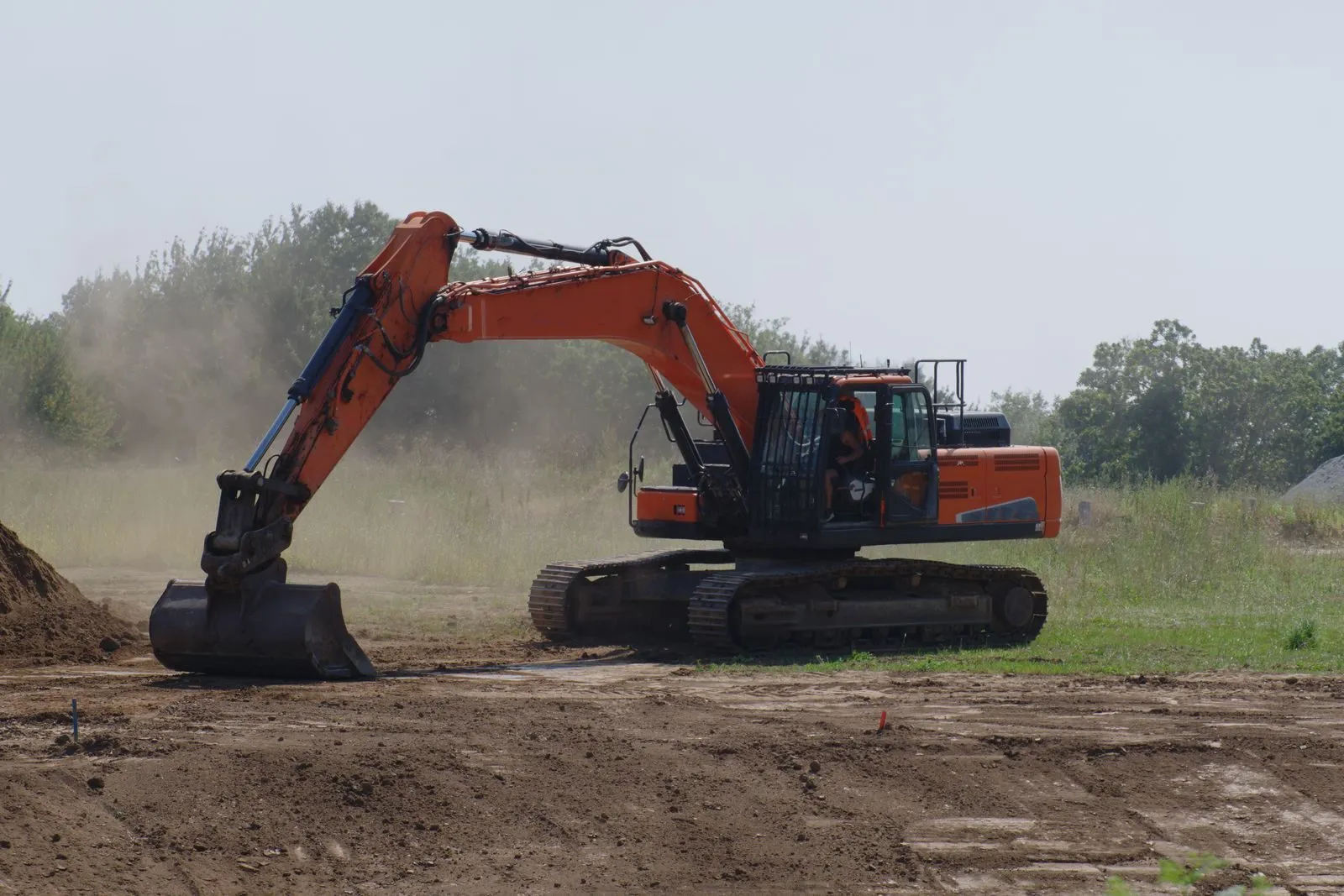
Heavy equipment refinancing is a way to borrow against machinery, trucks or other capital assets your business already owns. Instead of selling the equipment, you use its current market value as collateral and receive a lump sum or a new payment structure. The equipment stays on your site and keeps working. It is most common among construction, trucking, mining and forestry businesses that have significant equity tied up in iron they use every day.
Key takeaways
- You can refinance equipment you own outright or equipment where a previous loan or lease is nearly paid off, as long as there is enough equity between the market value and any remaining balance.
- The lender registers a security interest under the provincial Personal Property Security Act (PPSA) and uses the equipment as collateral, similar to how a mortgage works against real estate.
- Heavy equipment often holds its value better than lighter commercial assets, which means more equity available to borrow against. Excavators, loaders and highway trucks from recognized manufacturers tend to have the strongest resale markets.
- The cash you pull out is not taxable income. It is a loan. You continue to claim capital cost allowance (CCA) on the equipment as before, and the interest on the refinance is generally deductible as a business expense.
- Refinancing can also consolidate several older equipment payments into one, which simplifies cash flow and may reduce total monthly outlay.
| Item | Detail |
|---|---|
| Typical structure | Secured term loan or sale-leaseback against owned equipment |
| What qualifies | Equipment with a verifiable serial number, active resale market and clear or near-clear title |
| CCA class for most heavy equipment | Class 38 at 30% (excavators, loaders, dozers, compactors) |
| CCA class for heavy freight trucks | Class 16 at 40% (trucks rated above 11,788 kilograms, acquired after December 6, 1991) |
| Bank of Canada policy rate | 2.25% as of October 2026 |
| Funding through CBL Financial | Up to $1,000,000, terms from 24 to 72 months |
When refinancing heavy equipment makes sense
Not every situation calls for a refinance. It works best when a business has a clear, productive use for the cash and the monthly payments fit within operating cash flow.
Common reasons businesses refinance
- Fund a new project or contract. A construction company lands a large job but needs cash for mobilization, bonding or materials. Refinancing an excavator or loader that is already paid off turns dormant equity into working capital without selling the machine.
- Replace or add equipment without a separate loan. The proceeds from refinancing one asset can fund the down payment or full purchase of another, keeping your total number of active credit facilities lower.
- Consolidate older payments. If you are making three or four separate monthly payments on different machines acquired at different times, refinancing them into a single facility simplifies your bookkeeping and may lower the combined monthly amount.
- Cover a seasonal gap. Businesses with seasonal revenue patterns (road construction, logging, farming) sometimes refinance equipment ahead of a slow period to bridge the gap between when costs hit and when revenue returns.
- Manage a tax event. After a profitable year, some owners refinance to generate cash that funds other deductible expenses, rather than drawing down a credit line or depleting operating reserves.
How the process works
Step 1: List the equipment
Start with the make, model, year, serial number and hours or mileage for each machine you want to refinance. If there is an existing loan or lease, note the remaining balance and the lender’s name.
Step 2: Valuation
The lender needs to know what the equipment is worth today. Depending on the value and the lender, this could mean a desktop appraisal based on published auction data and dealer guides, or an in-person inspection. Recognized brands with active resale markets (Caterpillar, John Deere, Komatsu, Volvo, Kenworth, Peterbilt) are the easiest to value because comparable sales data is readily available.
Step 3: Lien search and payout
The lender searches the provincial PPSA registry to confirm whether any other party holds a security interest on the equipment. If there is an existing lien from a previous loan, the refinance lender typically pays it out directly and registers its own security interest. The net proceeds, after any payout, go to you.
Step 4: Approval and funding
Once the lender is satisfied with the equipment’s value, your business financials and the lien position, it issues an approval. You sign the agreement, the lender registers its PPSA lien, and the funds are advanced. Through CBL Financial, funding can happen in as little as 48 hours once the file is complete.
Sale-leaseback vs refinance loan
There are two common structures for pulling cash out of equipment. Both leave the equipment on your site, but they differ in ownership and tax treatment.
| Factor | Refinance loan | Sale-leaseback |
|---|---|---|
| Ownership | You keep ownership throughout | You sell the equipment to the lessor and lease it back |
| Balance sheet | The asset stays on your books; the loan is a liability | The asset comes off your books (operating lease) or stays on (finance lease) |
| CCA | You continue to claim CCA on the equipment | The lessor claims CCA; you deduct lease payments as an expense |
| End of term | The loan is paid off and you still own the equipment | You typically buy it back at a residual value or return it |
| Best for | Owners who want to retain ownership and claim CCA | Owners who prefer to deduct the full payment as an expense and want a clean balance sheet |
Pro tip: If you plan to keep the equipment for years after the refinance term ends, a loan usually makes more sense because you retain ownership the entire time and there is no buyout at the end. A sale-leaseback can work well if you want to reduce the asset load on your balance sheet or if the lease payments provide a more favourable deduction pattern than CCA for your situation. Talk to your accountant before choosing.
Tax considerations
CCA continues on a refinance loan
When you refinance equipment with a loan, nothing changes on the tax side for the asset itself. You still own it and continue to claim CCA at the prescribed rate for the asset’s class. For most heavy equipment (excavators, bulldozers, loaders, compactors), that is Class 38 at 30% on a declining balance. For heavy freight trucks rated above 11,788 kilograms acquired after December 6, 1991, the rate is 40% under Class 16.
The interest you pay on the refinance loan is generally deductible as a business expense, which reduces the effective cost of borrowing.
Accelerated Investment Incentive
If you originally acquired the equipment after November 20, 2018 and it became available for use before 2028, the Accelerated Investment Incentive may have given you an enhanced first-year CCA deduction. Refinancing does not affect CCA already claimed. However, if you are using the refinance proceeds to buy new equipment, the new asset may also qualify for the AII if it enters service before the program sunsets.
The cash is not income
The lump sum you receive from refinancing is not revenue. It is loan proceeds. You do not report it as income on your tax return. You report only the interest as a deductible expense.
Heads-up: A sale-leaseback is treated differently. Because you are selling the asset to the lessor, there may be a recapture of CCA or a capital gain if the sale price exceeds the undepreciated capital cost (UCC) of the asset in its class. Your accountant should model this before you sign.
What lenders look at
Lenders evaluating a heavy equipment refinance focus on a few areas:
- Equipment value and condition. The machine’s current fair market value is the ceiling on how much you can borrow. Well-maintained equipment with lower hours or mileage for its age appraises higher. Recognized brands with liquid resale markets score better.
- Equity. If you still owe money on the equipment, the lender subtracts that balance from the market value. The remaining equity is what you can borrow against. Equipment that is fully paid off gives you the most room.
- Your business financials. Revenue, cash flow and time in business help the lender gauge repayment capacity. Heavier equipment values support larger advances, but the payments still need to fit your cash flow.
- Lien position. The lender wants to be in first position on the PPSA registry. If another lender already has a registered interest, the refinance lender typically pays that balance off at funding and registers its own lien.
- Serial number and title. The equipment must have a verifiable serial number. For trucks, the VIN serves this purpose. The lender needs to confirm you are the legal owner.
Equipment that refinances well
Not all equipment is equally easy to refinance. Lenders prefer assets with strong, predictable resale values.
| Equipment type | Why it refinances well |
|---|---|
| Excavators | High demand across construction, demolition and utilities; strong aftermarket from brands like Caterpillar, John Deere, Komatsu, Hitachi |
| Highway trucks and trailers | Liquid resale market, standardized specifications, easy to value by VIN |
| Wheel loaders and skid steers | Versatile across industries, steady demand, multiple size classes |
| Cranes | High unit value means more equity to borrow against; specialized but active resale market |
| Dozers and graders | Essential for earthwork and road building; recognized brands hold value |
Equipment that is highly specialized, custom-built or from manufacturers with limited dealer networks can be harder to refinance because the lender has fewer comparable sales to establish a value and a smaller pool of buyers if it needs to recover the asset.
How much can you borrow
The advance amount depends on the equipment’s fair market value and any existing liens. Lenders typically advance a percentage of the appraised value, not the full amount. The exact percentage varies by lender, asset type and your credit profile, but the general principle is straightforward: the lender needs a margin between what it lends and what it could recover by selling the equipment.
If you own an excavator appraised at a certain value with no liens against it, you could expect to borrow a meaningful portion of that value. If the same machine still has a balance from a prior loan, the lender subtracts that balance first and advances against the remaining equity.
Use the equipment financing calculator to estimate monthly payments for different loan amounts and terms.
Steps to prepare for a heavy equipment refinance
- Gather equipment details. Make, model, year, serial number, hours or mileage, and maintenance records. Well-documented service history supports a higher valuation.
- Check for existing liens. If you financed the equipment previously, confirm the remaining balance and whether the lien has been discharged. You can search the PPSA registry in your province, or your lender can do this.
- Get a market value estimate. Published auction results, dealer quotes or a formal appraisal give you a realistic picture of what the equipment is worth. Knowing this before you apply helps you gauge how much cash you can expect.
- Prepare basic financials. Recent business bank statements, financial statements or tax returns. The lender uses these to assess your ability to repay.
- Decide on structure. Do you want a refinance loan (keep ownership and claim CCA) or a sale-leaseback (deduct lease payments, possibly remove the asset from your balance sheet)? If unsure, your accountant and your financing broker can help you compare.
How CBL Financial can help
CBL Financial arranges equipment refinancing across Canada for deals up to $1,000,000 with terms from 24 to 72 months. You list the equipment you want to refinance, we match it to a lender, and the equipment stays on your site throughout. For more on how the process works, see our equipment refinancing service page or start an application.
Frequently asked questions
Can I refinance equipment that still has a balance owing?
Yes. The refinance lender pays out the existing balance and registers its own security interest. You receive the difference between the new loan amount and the payout. The key requirement is that there is enough equity in the equipment, meaning the market value exceeds the remaining balance by a margin the lender is comfortable with.
Does the equipment need to be fully paid off?
No. Equipment with substantial equity can be refinanced even if a balance remains. The lender pays out the prior balance at closing and advances the net difference to you. Equipment that is fully owned gives you the most borrowing room because there is no prior balance to subtract.
How is the equipment valued?
Lenders use a combination of published auction data, dealer guides and, in some cases, a physical inspection. The valuation method depends on the equipment type and the loan amount. Widely traded equipment from major manufacturers (Caterpillar, John Deere, Volvo, Kenworth) is easier to value because comparable sales data is plentiful.
Will refinancing affect my CCA claims?
If you choose a refinance loan, no. You remain the owner and continue to claim CCA on the equipment at the rate for its class. The interest on the new loan is also generally deductible. If you choose a sale-leaseback, the tax treatment changes because you transfer ownership to the lessor. Consult your accountant before deciding.
How long does the process take?
It depends on the complexity of the file. A straightforward refinance on a single piece of well-documented equipment with clear title can fund quickly. Through CBL Financial, funding can happen in as little as 48 hours once the file is complete. Files with multiple pieces of equipment, outstanding liens to pay out, or the need for an in-person appraisal take longer.
Is the cash I receive taxable?
No. Refinance proceeds are a loan, not revenue. You do not report the lump sum as income. You only deduct the interest portion of your payments as a business expense. However, in a sale-leaseback, the sale itself may trigger CCA recapture or a capital gain if the sale price exceeds the undepreciated capital cost of the asset. Your accountant should review this.
General information, not financial advice.