Commercial Truck Loan Rates in Canada: What Affects Your Rate and How to Compare Offers
What determines commercial truck loan rates in Canada and how to compare competing offers on the same truck.
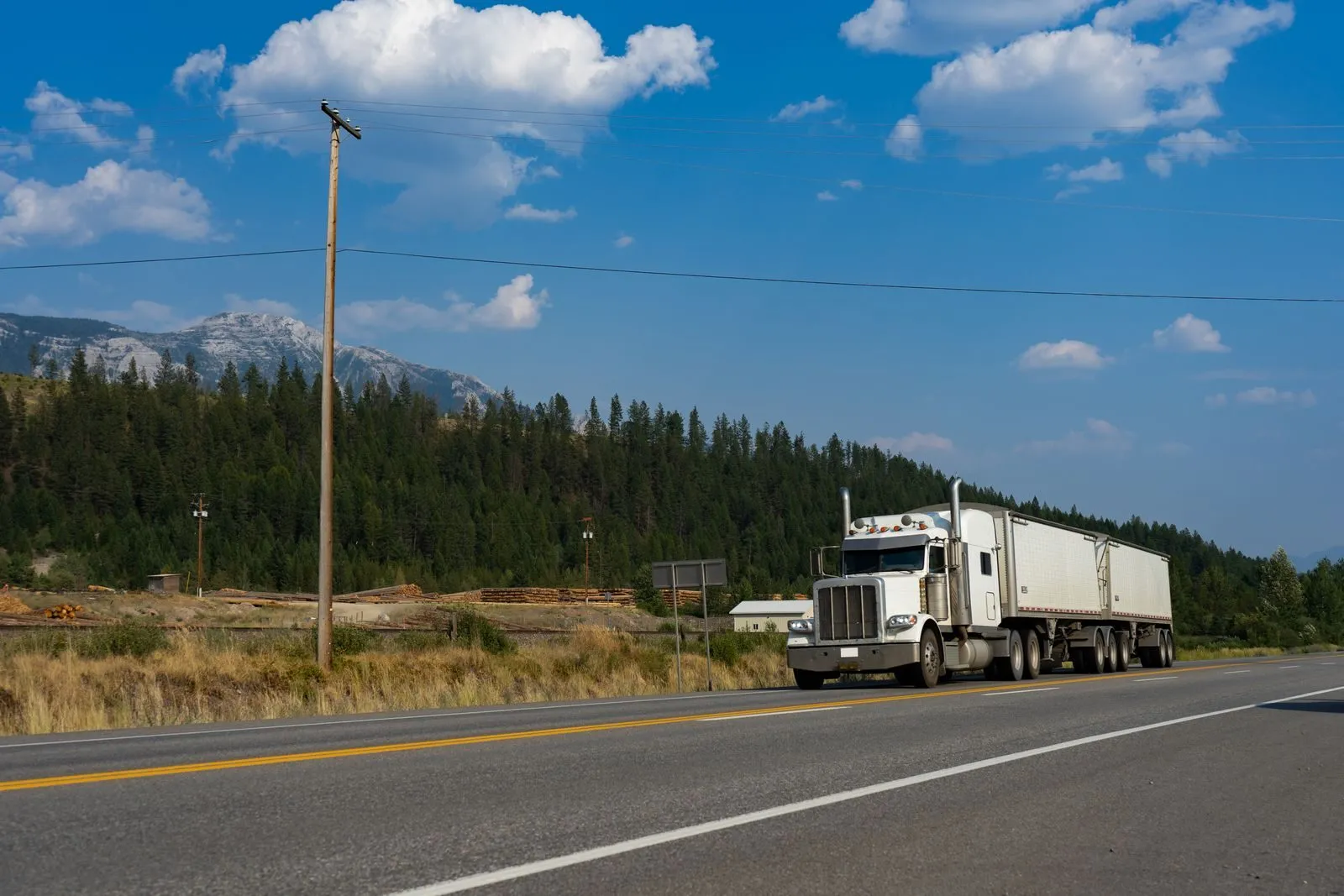
A commercial truck loan rate is what a lender charges you to finance a truck over a set term. In Canada, truck loan rates build up from the Bank of Canada’s policy rate, with a margin added based on your credit profile, the truck’s age and resale value, the loan term, and how the lender prices risk. Because trucks hold their value differently depending on class, age and mileage, the rate on a Class 8 highway tractor will differ from the rate on a five-year-old medium-duty box truck, even with the same borrower.
Key takeaways
- The Bank of Canada’s policy rate sits at 2.50% as of October 2026, putting the prime rate at 4.70% as of November 2026. Your truck loan rate adds a margin on top, sized to your credit and the deal.
- Heavy freight trucks rated above 11,788 kg qualify for CCA Class 16 at 40% per year, a faster write-off than the 30% rate lighter commercial trucks get under Class 10.
- CSBFP-backed truck loans cap the floating rate at prime plus 3%, one of the lower-cost options for businesses with gross revenue under $10,000,000.
- Always compare the total cost of borrowing over the full term, not just the monthly payment, because fees, term length and deal structure vary between lenders.
| Item | Detail |
|---|---|
| Bank of Canada policy rate | 2.50% as of October 2026 |
| Canadian prime rate | 4.70% as of November 2026 |
| Average SME term loan rate | 9% (ISED, 2023 survey) |
| CSBFP floating rate cap | Prime plus 3% |
| CCA Class 10 (most commercial trucks) | 30% declining balance |
| CCA Class 16 (freight trucks above 11,788 kg) | 40% declining balance |
| Funding through CBL Financial | Up to $1,000,000, terms from 24 to 72 months |
What sets your commercial truck loan rate
The Bank of Canada rate and prime
Every commercial lending rate in Canada starts with the Bank of Canada’s policy rate, currently 2.50% as of October 2026. When the Bank moves this rate, the prime rate that chartered banks charge their strongest borrowers moves with it. As of November 2026, prime sits at 4.70%. Your truck loan rate is typically quoted as prime plus a margin, or as a fixed rate that reflects where the lender expects prime to go over the term.
Your credit profile
Lenders price credit risk into the margin they charge above prime. A trucking company owner with strong personal credit, clean payment history and several years of steady revenue will see a smaller margin than someone with a thinner file. A weaker credit profile does not automatically rule you out of financing, but the lender will typically charge a wider margin or ask for a larger down payment to offset the risk. For more on how lenders evaluate weaker files, see our guide to equipment financing with bad credit.
The truck itself
Trucks are collateral, and the lender cares about what the truck would fetch if they had to recover it. Several factors affect that value.
Age and mileage. A current-model-year highway tractor with low mileage carries a clearer resale value than an older unit with high kilometres on it. Newer trucks with published auction values are easier for lenders to underwrite, and that typically means a tighter margin.
Class and type. Class 8 highway tractors have a deep secondary market with well-established pricing. Medium-duty trucks (Class 5 to 7) also trade actively. Specialized builds, such as a custom-bodied vacuum truck or a mobile crane chassis, have fewer potential buyers if the lender needs to resell, and that can push the margin wider.
Condition and records. A truck with documented service history and no major frame or engine problems is a better bet for the lender. Some lenders discount the collateral value of trucks with incomplete maintenance records or prior accident damage.
Loan term
Longer terms spread the payments but increase the lender’s exposure, so the rate or margin tends to be slightly higher. A shorter term on a relatively new truck will often carry a tighter margin than a longer term on the same unit with the same borrower, because the lender faces less uncertainty about the truck’s condition and value at the end. For an overview of how term length affects cost more broadly, see our guide to equipment loan rates in Canada.
Down payment
A larger down payment reduces the loan-to-value ratio, which lowers the lender’s risk. On a borderline file, a meaningful down payment can move the pricing from one rate tier to the next, or turn a decline into an approval.
Owner-operator vs fleet
Lenders view these differently. A fleet operator with multiple revenue-generating trucks, diversified freight contracts, and audited financial statements is a lower-risk file than a first-time owner-operator buying a single truck. An existing relationship with a lender and a track record of on-time payments on prior units can also earn a better rate on the next one.
Government-backed rate benchmarks
The Canada Small Business Financing Program (CSBFP) provides one of the clearest rate benchmarks for truck purchases. Businesses with gross annual revenue of $10,000,000 or less can borrow up to $500,000 for equipment (including commercial vehicles) through a participating lender, with rates capped at:
- Floating rate: the lender’s prime rate plus 3%
- Fixed rate: the lender’s residential mortgage rate for that term, plus 3%
Both caps include a 1.25% annual administration fee. There is also a 2% registration fee on the total loan amount, which can be financed into the loan. The maximum term for CSBFP equipment loans is 15 years.
The program works because the federal government shares the default risk with the lender, letting it offer rates below what a conventional commercial deal would price at. Not every business qualifies (farming operations are excluded, and the revenue ceiling applies), but for those that do, the CSBFP rate cap is a useful benchmark. If a conventional lender quotes you well above prime plus 3% and your file is solid, that gap is worth questioning.
The 2023 ISED Survey on Financing and Growth of SMEs found that the average rate on term loans for Canadian small businesses was 9%. That figure covers all equipment types and credit profiles across the economy, so your truck deal could land above or below it depending on the factors above.
Tax deductions that change the effective cost
The rate on the loan is not the whole cost picture. How the truck interacts with your taxes changes what you actually pay.
When you buy a truck with a loan, you own the asset and claim Capital Cost Allowance (CCA). Most commercial trucks fall into CCA Class 10 at 30% per year on a declining balance. Heavy freight trucks with a gross vehicle weight rating above 11,788 kg qualify for Class 16 at 40%, a meaningfully faster write-off that puts more of the deduction into the early years of ownership. The loan’s interest portion is also generally deductible as a business expense.
With a truck lease, you typically deduct the full lease payment as a business expense in the year you pay it, rather than depreciating the asset over several years. Which structure produces the lower after-tax cost depends on your tax bracket, the CCA class and the term length. Your accountant can model both scenarios with your actual numbers. For a broader comparison of the tax treatment, see our guide to equipment financing tax benefits.
Pro tip: If your truck’s gross vehicle weight puts it above 11,788 kg, confirm with your accountant that it qualifies for CCA Class 16 at 40% rather than Class 10 at 30%. The faster write-off front-loads more of the tax deduction into the early years, which can meaningfully reduce your after-tax cost of ownership.
How to compare truck loan offers
-
Get quotes from more than one source. A bank, a credit union and a broker channel will each price the same truck deal differently. Two or three offers give you room to negotiate and a clearer picture of where the market sits.
-
Standardize the terms. Same truck, same term length, same down payment. A shorter-term quote and a longer-term quote are not comparable on monthly payment alone because the total dollars paid over the life of the deal differ.
-
Ask for the total cost of borrowing. Add every payment over the full term, plus fees, plus any end-of-term charges. That total is the number that makes competing offers truly comparable.
-
Read the prepayment clause. Some truck loans charge a penalty for paying off early. If you might sell the truck or pay down the balance before the term ends, this clause matters.
-
Factor in the tax treatment. The after-tax cost of a loan (where you claim CCA on the truck and deduct the interest) will differ from the after-tax cost of a lease (where the full payment is deductible). Run both through your accountant before deciding.
Heads-up: A lower monthly payment does not always mean a lower total cost. A longer term reduces the payment but increases the total you pay over the life of the loan. Compare total dollars, not monthly dollars.
How CBL Financial can help
CBL Financial arranges truck loans and leases from multiple lenders across Canada, with funding up to $1,000,000 and terms from 24 to 72 months. Because your application goes to lenders matched to transportation and equipment deals, you see competing offers rather than a single take-it-or-leave-it rate. Run the numbers on the equipment financing calculator or apply online to get started.
Frequently asked questions
What is a typical commercial truck loan rate in Canada?
There is no single typical rate. The 2023 ISED survey found that the average rate across all SME term loans was 9%, but your truck deal will depend on the policy rate at the time, your credit, the truck’s age and value, and the term. Government-backed CSBFP loans cap the floating rate at prime plus 3%, a useful benchmark for comparison.
Does the age of the truck affect the rate?
Yes. Newer trucks with low mileage and published auction values are easier for lenders to underwrite, so they typically carry a tighter margin. Older trucks with high mileage may still qualify, but the lender will often charge a wider margin to account for the lower and less certain resale value.
Is it cheaper to lease or finance a truck?
That depends on the deal structure, the term and your tax position. A lease payment is typically deductible as a business expense, while a loan lets you claim CCA on the truck and deduct the interest separately. Compare the total cost of borrowing for each option, including any end-of-term buyout on a lease, and run both through your accountant.
Do heavy trucks qualify for a faster tax write-off?
Freight trucks with a gross vehicle weight rating above 11,788 kg qualify for CCA Class 16 at 40% per year, compared to 30% under Class 10 for lighter commercial vehicles. That faster depreciation schedule front-loads more of the tax deduction into the early years of ownership.
Can I finance a used commercial truck?
Yes. Used trucks are regularly financed through loans and leases. The rate will reflect the truck’s age, mileage and condition. A well-maintained used truck with documented service records and a clear title will attract better terms than one without. CBL Financial arranges financing on used trucks from dealers, auctions and private sellers across Canada.
General information, not financial advice.